Friday, February 28, 2014

Still recycling

 
I apologise for the slight pause with blogging over the winter, partly due to sorting out the recycling accounts and then getting used to a new laptop when my very old computer died.
 
Our  recycling centre was opened 20 years ago!  The drawings above are from that time and are self portraits drawn by some of the children that I taught. My weekly assemblies were always about caring for our environment (in  its broadest sense, from waste to wonder) with the children went to secondary school  quite a few of them were eco-warriors  and still are, I hope!
We continue to collect paper, glass, textiles, drinks cartons, books and aluminium cans at our recycling centre in the fenced off area at the end of the school playground.
I  pick up toner and inkjet cartridges from local companies and Takeback Ltd  collects  from other local and national companies on our behalf.
Spectacles are given to Vision Aid Overseas, via our local optician and aluminium foil is collected   by members of the Sudbury Resource Centre.
Everyone can do their bit to help the environment and there's a wonderful new website hat can inspire you. Check it out 


Wednesday, November 27, 2013

More on Bargain books!

Looking back over the year, I've spent a busy and fruitful time selling the best books that have been donated to our recycling centre.
Over 400 have been bought from the stall at my gate for 20p each, but more if the buyer thinks they are worth it.  There is a selection of over 300.on my Amazon.shop, all reasonably priced and in very good or better conditition.  I've also sent quite a few to Amazon to be  "traded-in".
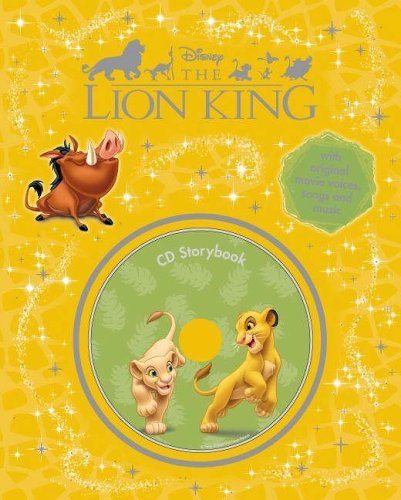
This is one of the latest books to go on   Amazon. It's "as new" and the pocket that hold the CD is unopened.

This weekend I shall be working out the amount of money to give school!
Watch this space.

Thursday, August 22, 2013

What to do with plastics

We can't recycle plastics, so what do you do with them? Most will go in your blue bin; some can be recycled at the Household Waste and Recycling Centre in Crockett Way, Hadleigh, straight across the Hadleigh by-pass, then turn left at the roundabout.

Here's a video that explains which plastics can be recycled.


Sunday, February 17, 2013

Another new Textile Bank?

Well--the rag raiders have been again! This time they damaged our bank and no-one could open it. So  thanks to prompt action by Black Country Rags (BCR), we now have this FORT KNOX style container on site.
The police have reacted quickly and perhaps this might be the last time that I have to contact them.
If any rag raiders read this, they should know that we are hatching a cunning plan!

Sunday, December 09, 2012

Money, Money, Money

All aspects of our recycling fund raising schemes, continue to benefit  Elmsett School. Recently, we have decided to close the recycling account with the Ipswich Building Society and put all the money straight into the School fund.  This will enable the school  access recycling funds as and when they need the money.
We would like to thank Janice Dixon and the staff at Larking Gowen, for doing the recycling accounts, free of charge, for nearly 20 years.
I shall continue to organise the recycling centre.
The closing amount in the recycling fund was £8,656.95  and a cheque for this amount was handed over to the headmistress, Myra Shackleton last week.

Saturday, October 13, 2012

It's arrived!

Our tamper-proof textile bank has been delivered by Black Country Rags, so unless the rag raiders attack it with precision metal cutting implements, our textile donations should be safe!
Also--I have the code and can check how much is in the bank. I wonder if other schools  do this? I know that another local small school rarely has much in their bank when BCR makes a collection. It's easy money for the rogue traders!!

Thursday, August 30, 2012

Don't bin it, eat it!

My gran would have been astonished by the amount of perfectly good food that the average British family throws away these days (it amounts to 7.2 million tonnes of food and drink a year). Some of it's because shoppers don't make lists and buy too much, some is because consumers don't understand what is or isn't safe to eat, and some of it is because people don't know what to make with it. All of this food waste isn't just a waste of your housekeeping money; it costs a lot of money to dispose of it - £12bn a year - that we pay for through our council taxes.

In this video, two Birmingham chefs show what they can do with some vegetables that fussy shoppers would reject. For more ideas, go to the Love Food, Hate Waste website. If you want to be really thrifty, look for the battered-looking produce that's going cheap at the end of any market day, and buy yourself some bargains to make cheap and easy meals.


Monday, August 27, 2012

Old Knobbley, a tree with a mission.

 My daughter, has just published her first children's book about Old Knobbley, an 800 year old Oak tree,  which is still growing slowly, in a field on the outskirts of Mistley, Essex 
The book tells us about the important events in Old Knobbley's life and Morag has illustrated each stage with detailed, beautifull  drawings. At the end, children are encouraged to collect acorns and grow their own oak trees and help to create an Old Knobley Forest that will live for another 800 years.
So buy the book from Lulu.com and have a go!    Just search for Old Knobbley


She is an ex-pupil of Elmsett and Hadleigh High School and has always been interested in the environment and knows that planting trees is one of the best ways to slow down the progress of climate change.


Sunday, August 19, 2012

Company rescues Can Crushing efforts!

I bought this super, sturdy can crusher from Home Recycling about 8 years ago. Last weekend the black crushing mechanism  on the lid broke. Home Recycling came to the rescue and  the new part was attached  to a cleaned lid, ready for action! 
Our thanks to Chris Hasling and his team. This is a small, successful company, provides an excellent, friendly service. Great!

Sunday, August 05, 2012

Green congratulations

Well done everyone at Elmsett School.They have worked really hard on developing their school allotment in an eco-friendly way and have recently been awarded their fourth Green Flag in the Eco-Schools program.  Mrs Shackleton  talked about the school's involvement with the Eco schools scheme during  the final assembly last term and mentioned that the first flag was awarded for setting up and developing the recycling centre


Unfortunately, I was unable to attend, so I was surprised and delighted when my daughter delivered this lovely bouquet and thank you cards from all the pupils.

Thursday, June 28, 2012

Doggy bags when you're eating out?

If you've paid for it, why waste it? I often ask for a doggy bag. The more we do it, the less we waste and the more it becomes normal.

Saturday, June 16, 2012

Plastic never goes away

Recycling is good, but some materials are best avoided in the first place, especially plastic. As Beth Terry says in her book, 'Plastic Free: How I Kicked the Plastic Habit and How You Can Too',
The only plastic that actually gets recycled is that which of Recycling plastics reclaimers are willing to buy. Recycling is a business, and if there is no market for a material, it will end up in the landfill or incinerator. ...Another reason is the cost of processing. While it’s possible to incorporate recycled PET back into new bottles, cleaning the material to the standards necessary for food contact is much more resource intensive and expensive than simply using virgin resin, so much of it gets downcycled into secondary products like carpet or polar fleece. And the way recycling centers combine mixed plastics into bales impacts the quality of the material available for sale.
We'd be kidding ourselves if we imagined that by recycling most of our household waste, we're doing our bit for the environment. We are doing a bit, but is it enough? Being aware of the amount of packaging that we accept with our shopping is one way that we can start to cut down on plastics, which may be recycled (some of them, anyway), but will still end up in landfill or even the sea eventually because they take many years to break down, however many times they're recycled.

Take plastic milk containers. Many people buy milk from the supermarket or local store in plastic containers. They're convenient and cheap, though milk producers will say that the milk they contain isn't expensive enough (and they'd be right). But what happens to the containers? Only 35% of them are recycled, and those that are consume a lot of energy. This could be avoided if more people used the doorstep delivery service for milk in glass bottles, which are returned for re-use or recycling.

More and more people are using "bags for life" at the supermarket, but most of them are made from plastic, even if it is a stronger version. What about the quality hessian bags we sell here in Elmsett, promoting our community woodland? Too many people are still buying bottled water, when what comes out of the tap is just as good and a lot cheaper. If you need water on the go, re-use a plastic bottle or buy a metal one from any good camping store. There are so many ways that we can avoid plastic - it isn't that difficult.

Does any of this matter? It does if you genuinely care about the environment, the world our children will inherit, and the health of our seas and the creatures that live in them. Try to avoid plastic, and if you can't, dispose of it responsibly.


Click here to learn more about the global plastic catastrophe.

Thursday, May 31, 2012

Promoting recycling

Lady Charity Blue-Binitall will be representing our school's recycling centre at Buckle's Wood on Tuesday, when a disease resistant elm tree will be planted to commemorate the Queen's Jubilee.
Sadly Lady Blue -binitall has fallen upon hard times and has asked if  I  would rummage through the textile bank to find something suitably elegant for her to wear. I'm sure Black Country Rags will not object, as she has promised to return them after the event,
Meanwhile, in order to promote her attendanceat the celebration, she has kindly allowed me to photograph her in her best hat.

Sunday, May 20, 2012

A good read

We started collecting unwanted books a couple of years ago and I've been amazed at the quantity and quality of books that have been left at the recycling centre; too many to sell locally and at the gate!
So I've set up a store on Amazon for the best "as new" books and other, older and antique and interesting paper and hardbacks. All at avery reasonable prices!
www.amazon.co.uk/shops/ecomaid

Have a look. Would Mysteries of the Dead Sea Scrolls by Harvey Minkoff be of interest?
It doesn't appear to have been read!

Thursday, May 10, 2012

Textiles

Removing the textiles from the clothing bank and taking them to a safe place was a good idea. So far this year, we have helped Malcolm, the driver from BCR,  load 870kg  of clothes, shoes, curtains,sheets and blankets into his lorry.
Our local police are keeping an eye out for white vans, since one was stopped in one of the local villages  and found to be full of textiles! The van was was caught by CCTV cameras, heading towards and away from Ipswich. So good news all round!

Saturday, January 21, 2012

THE BIG GAP

There are no sinister reasons for the lack of postings since September. I've just been busy doing other things, as well as recycling!
However, there has been a lot of extra activity at the recycling centre to insure that all the textiles that are left there, are not stolen by the rogue traders, a nationwide problem it would seem.

TEXTILE BANK AND ROGUE TRADERS

I have a key to our textile bank and keep a check on the amount left there, so I know when items disappear. Then, the police and Black Country Rags are informed, but these thieves seem to be able to carry our their dastardly trade unhindered! I suspect that most textile banks are not monitored, so that most schools and charities who recycle textiles for fundraising purposes, have no idea that these people are taking money from their good cause.

UPDATE

Following this, the police stopped two male occupants in a white transit van, which was full of textiles. more textile banks have been raided in Stowmarket and I'm pleased to report that our local council is taking this very seriously.

They have sent a letter to all organisations that have recycling facilities, warning them about rogue traders and asking everyone to be vigilant and report any suspicious incidents involving

people in unmarked vans trying to gain access to clothing banks.

They are also liaisoning with BCR Global Textiles, who in turn are going to replace our bank witha new, NO ACCESS to anyone who doesn't know the code

B R I L L I A N T

Monday, June 13, 2011

Money Matters

RECYCLING
to help the environment,
as well as raising funds

At about this time every year I send the records for the recycling fund to the accountants Larking Gowen to be checked. Next term, I shall give a copy of their report to the Governors.
The income for this year is quite pleasing, bearing in mind that a lot of textiles were taken from our textile bank at the end of last year.
Most of the money raised derives from the cartridges that are donated from local and national companies and the weight credits from the paper, glass and textile banks (just over £3800.00).
We raised an extra £200.00 plus from aluminium cans, CDs and book sales.
Not bad for a small village school, with less than 100 pupils.

Sunday, May 15, 2011

Recycling plastic milk bottles

Just a reminder from Friends of the Earth, although Plastic milk bottles are recycled, a lot still end up in landfil sites, where they will take thousands of years to decompose.

Sunday, May 01, 2011

Interesting Article by Dr. Gary Robertshaw

Global warming - getting the message across

Speaking to an audience of MEPs and policymakers at a conference in Brussels, Prince Charles attacked climate change sceptics and deniers for what he referred to as the corrosive impact they exerted on public perceptions. And such perceptions and deliberate manipulation on the truth should not be underestimated. How many of us have heard comments such as: global warming is a myth, or its all part of a natural cycle and its been hotter in the past, long before humans started emitting carbon etc.
Although there now exists a vast body of evidence pointing towards man-made climate change, deniers continue to perpetuate the myth that thousands of scientists throughout the world are conspiring to mislead the public and that the world would have warmed anyway, without the billions of tonnes of carbon being pumped into the atmosphere each year.
This commonly held belief borders on the irrational and is counter to the vast consensus of the scientific community. On a more emotive level, the Prince posed the question: I would ask how these people are going to face their grandchildren and admit to them they failed their future. He went on to say that they were playing a reckless game of roulette with the future inheritance of those who come after us. David Attenborough has made similar comments in reference to his own grandchildren.
Barack Obama has also echoed the same sentiments. “The issue of climate change is one that we ignore at our own peril. There may still be disputes about exactly how much we are contributing to the warming of the earth’s atmosphere and how much is naturally occurring, but what we can be scientifically certain of is that our continued use of fossil fuels is pushing us to a point of no return. And unless we free ourselves from a dependence on these fossil fuels and chart a new course on energy in this country, we are condemning future generations to global catastrophe”.
A further argument used by climate change sceptics relates to economic growth. That increased carbon emissions are a prerequisite to GDP increases and economic well-being, especially for countries such as China and India. According to this viewpoint, curtailing carbon emissions would restrict economic growth. However, this argument is short-termist and ultimately flawed precisely because economic growth in the longer-term is inextricably connected to the environment. At a fundamental level, the Earth has finite resources yet economic growth is predicated on an ever-increasing population consuming an ever-increasing amount of resources. At some point soon, the capacity of the planet to continue supporting this bottomless pit type economic growth will start to diminish.
This view was reflected in the Prince’s words. “I cannot see how we can possibly maintain the growth of GDP in the long term if we continue to consume our planet as voraciously as we are doing. The fabric of the Earths life support system may be beginning to fragment”.
Which brings us to another important point. Many in the environmental movement have failed to address a number of critical issues. Firstly, a large number of environmental organisations and campaign groups do not tackle the issue of global population growth, choosing instead to ignore it completely or to sidestep the issue because its seen as too politically sensitive. Yet it’s a central environmental problem that cannot be brushed aside. A statement by the World Scientists Warning to Humanity, signed by 1600 senior scientists from 70 countries, including 102 Nobel Prize laureates, has said: Pressures resulting from unrestrained population growth put demands on the natural world that can overwhelm any efforts to achieve a sustainable future. If we are to halt the destruction of our environment then, we must accept limits to that growth. That does not imply a Chinese style approach to population quotas - programmes aimed at the better education and empowerment of women across the globe coupled with more readily available contraception methods are proven approaches to reducing birth rates.
Secondly, environmentalists should sell the benefits of sustainable living rather than just telling people what to give up. If we are constantly told that living environmentally friendly lives means giving up all that makes life worthwhile, then it is no surprise that people refuse to change. If public opinion is that the evidence for man-made climate is weak or questionable, and that protecting the environment means compromising standards of living then that leads to apathy and inaction.
Its is clear that the way forward relies on carrying the message beyond a growing but still small group of scientists and environmentalists to the wider public that humans are having an adverse and potentially catastrophic impact on the environment. The inheritance of future generations depends on protecting the environment, halting deforestation and the burning of fossil fuels and implementing programmes aimed at stabilising the global population.
The current situation is perhaps best summed up by Lester Brown, president of the Earth Policy Institute: Civilisation as we know it cannot withstand the stresses of continuing with business as usual. We have got to move, almost on a war footing, to cut carbon emissions, eradicate poverty, stabilise population. We must also restore natural support systems: forests and aquifers and soils. No civilisation ever survived that kind of destruction and nor will ours. We have not yet gone over the edge, but we are much closer than most people think.
Dr Gary Robertshaw
The Green Providers Directory